
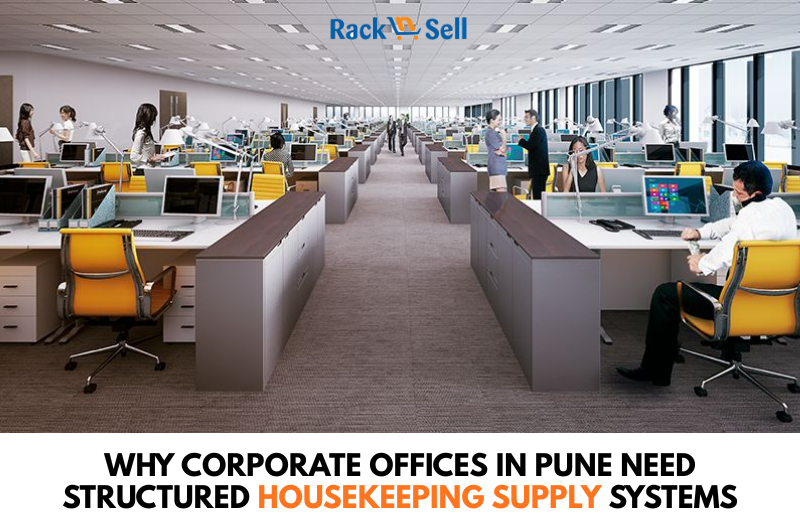
Pune has emerged as one of India’s fastest-growing corporate and IT destinations.
With the rapid expansion of technology parks, business centers, startups, and enterprise offices, workplace management standards have evolved significantly. Modern offices are expected to maintain clean, organized, and hygienic environments consistently.
However, maintaining workplace hygiene is not just about hiring housekeeping staff.
It depends heavily on how efficiently housekeeping supplies are managed.
From cleaning products and washroom essentials to sanitization materials and waste management supplies, every corporate office relies on a continuous flow of operational products to maintain smooth facility operations.
This is why businesses are increasingly adopting structured housekeeping supply systems in Pune to improve efficiency, consistency, and workplace hygiene standards.
Why Traditional Housekeeping Procurement Creates Problems
Many offices still manage housekeeping supplies through unstructured processes.
Products are ordered manually whenever stock runs low. Vendor coordination happens through calls or emails. Inventory tracking is often inconsistent.
At a smaller scale, this may appear manageable.
But as businesses grow, these systems begin creating operational challenges such as:
- Supply shortages
- Delayed replenishment
- Inconsistent product quality
- Poor inventory visibility
- Higher operational costs
Without a structured system, facility management becomes reactive instead of organized.
Workplace Hygiene Expectations Have Increased
Corporate workplaces today are expected to maintain much higher hygiene standards than before.
Employees, clients, and visitors notice:
- Washroom cleanliness
- Sanitized workspaces
- Pantry hygiene
- Overall office maintenance
Poor hygiene standards affect employee experience and workplace perception directly.
Businesses in Pune are now investing more in workplace hygiene management systems in India to maintain professional office environments consistently.
Structured Procurement Improves Operational Stability
A structured housekeeping supply system creates predictability.
Instead of depending on emergency purchases or manual coordination, businesses maintain planned procurement schedules and organized inventory systems.
This improves:
- Product availability
- Vendor coordination
- Procurement visibility
- Operational continuity
Using centralized procurement systems in India, businesses can manage housekeeping supplies more efficiently across departments and office locations.
Bulk Procurement Reduces Costs and Delays
Housekeeping products are recurring operational requirements.
Repeated small purchases increase procurement complexity and create unnecessary dependency on frequent vendor coordination.
Corporate offices in Pune are increasingly using bulk housekeeping supplies procurement in India to improve cost control and operational efficiency.
Bulk procurement helps organizations:
- Reduce procurement frequency
- Maintain inventory consistency
- Achieve better pricing
- Avoid urgent purchases
This creates more stable housekeeping operations.
Supplier Standardization Creates Consistency
One of the most common procurement problems businesses face is inconsistent supplier performance.
Different suppliers often provide varying product quality, delivery timelines, and pricing structures.
Structured housekeeping systems focus on supplier standardization.
Businesses create approved vendor networks to ensure:
- Consistent product quality
- Reliable deliveries
- Better procurement coordination
This reduces operational uncertainty and simplifies facility management.
Digital Procurement Platforms Simplify Housekeeping Management
Manual procurement methods become inefficient as operations scale.
Managing housekeeping supplies through spreadsheets, calls, and emails creates delays and tracking issues.
Digital procurement systems simplify operations by allowing businesses to:
- Manage procurement centrally
- Compare suppliers
- Track deliveries
- Monitor inventory and spending
Using B2B procurement platforms in India, Pune companies are improving procurement efficiency and reducing manual operational workload.
Inventory Management Is Critical for Facility Operations
Many offices struggle with inventory imbalance.
Some facilities overstock products unnecessarily, while others frequently run out of essential housekeeping supplies.
Both situations increase operational inefficiencies.
Structured housekeeping systems use inventory planning methods to monitor:
- Product usage patterns
- Replenishment schedules
- Consumption trends
This helps maintain balanced stock levels and improve operational planning.
Multi-Location Offices Need Standardized Systems
Many growing companies in Pune operate from multiple office locations or business units.
Managing housekeeping procurement independently for each location creates inconsistencies in product quality and operational standards.
Structured procurement systems allow businesses to standardize:
- Product categories
- Procurement workflows
- Vendor networks
- Inventory management systems
This improves scalability and operational consistency across locations.
Procurement Visibility Helps Businesses Improve Efficiency
Lack of procurement visibility is a major operational challenge.
Without proper tracking systems, businesses struggle to understand:
- Which products are consumed most frequently
- Which suppliers perform best
- Where procurement inefficiencies exist
Using digital procurement solutions in India, businesses can analyze procurement data and optimize housekeeping operations more effectively.
Procurement Automation Is Becoming Important
Modern businesses are increasingly automating housekeeping procurement workflows.
Automation helps with:
- Scheduled ordering
- Inventory alerts
- Approval management
- Vendor tracking
Companies adopting procurement automation in India are improving operational responsiveness and reducing manual procurement effort.
Housekeeping Is No Longer Just a Facility Function
Corporate offices now recognize that housekeeping directly affects:
- Employee satisfaction
- Workplace productivity
- Business image
- Visitor experience
As a result, housekeeping supply management is becoming part of broader operational strategy rather than just a maintenance activity.
What Efficient Housekeeping Systems Look Like
Businesses with efficient housekeeping systems usually focus on:
- Centralized procurement
- Bulk purchasing
- Supplier standardization
- Inventory planning
- Digital procurement management
These systems create smoother operations and improve workplace maintenance standards consistently.
Final Thought
As Pune continues growing as a major corporate and technology hub, workplace hygiene and facility management expectations will continue increasing.
Businesses that still rely on unstructured housekeeping procurement methods often face operational inefficiencies, inconsistent supply management, and rising costs.
This is why corporate offices are moving toward structured housekeeping supply systems supported by centralized procurement, bulk purchasing, supplier standardization, and digital procurement platforms.
Efficient housekeeping management is no longer just about maintaining cleanliness.
It is about creating operational stability, workplace consistency, and professional business environments.

